Intraocular Lens Options

At Diagnostic Eye Center in Houston, TX, our goal is to help our patients achieve their best possible vision. One of the many tools we use to achieve this is the advanced IOL (intraocular lens), which can help our patients see more clearly after cataract surgery or refractive lens exchange. Our surgeons at Diagnostic Eye Center are highly experienced with all types of intraocular lenses. Both Dr. Andrew Salem and Dr. Marc Sanders have performed more than 10,000 lens replacement procedures.
What is an IOL?
During cataract surgery, the cloudy natural lens of the eye is removed and replaced with an intraocular lens (IOL). The lens of the eye refracts (or focuses) light onto the retina at the back of the eye, resulting in the images we see. By replacing a lens clouded by cataracts, it is possible to restore clear vision, as well as correct a patient’s refractive error.
Some of our patients who have not been diagnosed with cataracts may also choose to undergo eye surgery to place IOLs so that they can correct common refractive errors like nearsightedness (myopia), farsightedness (hyperopia), and/or astigmatism. This elective procedure is called refractive lens exchange (RLE).
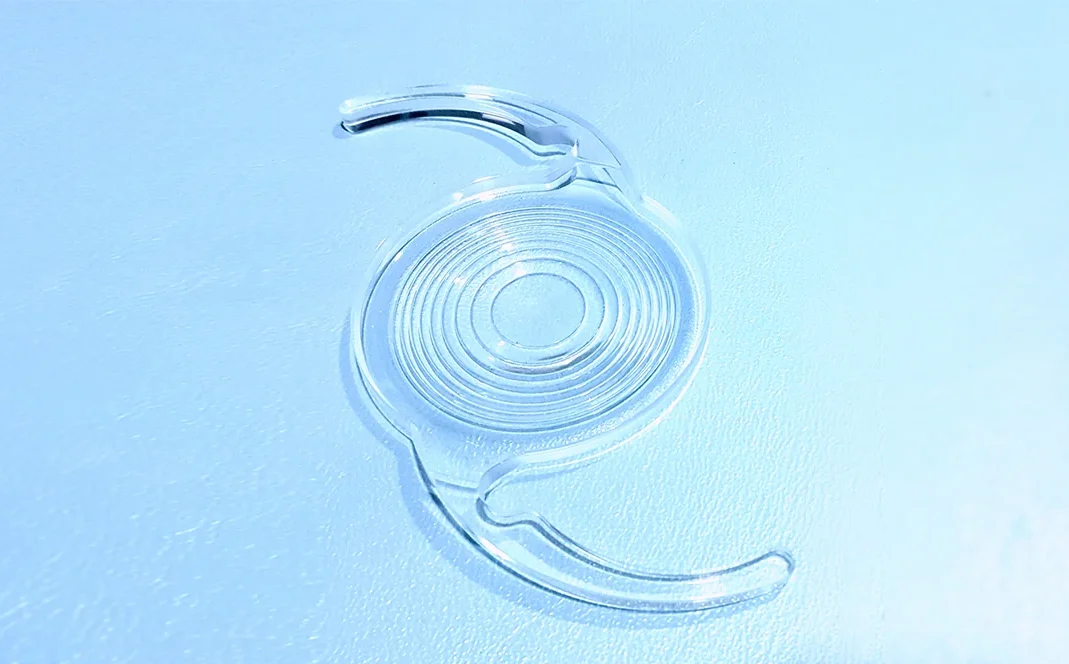
Standard IOLs vs Advanced IOLs
Standard IOLs, also known as monofocal IOLs, are covered by insurance to replace a cloudy lens during cataract surgery. These lenses can improve near or distance vision, but not both. Standard IOLs also do not correct astigmatism. Glasses or contacts will still be needed for some or all tasks.
For our patients who wish to eliminate cataracts and also reduce their dependence on glasses or contacts, advanced IOLs are a great option. We offer many advanced IOL options that can correct vision at a range of distances and may also provide additional benefits like UV protection.
Light Adjustable Lens™
The Light Adjustable Lens (LAL) by RxSight is a groundbreaking intraocular lens (IOL) that offers unparalleled post-implantation customization. Unlike traditional IOLs, the LAL allows for precise vision adjustments after cataract surgery. Following the initial procedure, patients undergo a series of non-invasive, in-office treatments using UV light to fine-tune the lens power. This ensures the best possible vision correction tailored to individual needs. Once the optimal prescription is achieved, it is permanently “locked in,” providing exceptional vision at the targeted distance.
This unique ability to adjust the lens post-surgery often reduces or eliminates the need for eyeglasses or contact lenses, making it an ideal choice for those seeking high-level visual clarity. The Light Adjustable Lens is especially beneficial for professionals who require precise vision, such as pilots and surgeons, offering flexibility and superior visual outcomes.
At Diagnostic Eye Center, our surgeons often recommend the Light Adjustable Lens for patients with a history of refractive surgery, such as LASIK, PRK, or Radial Keratotomy (RK). The LAL allows our doctors to perform post-operative adjustments to correct for the often unpredictable refractive changes caused by prior corneal surgery.
Read more about the Light Adjustable Lens
Multifocal/Trifocal IOLs
Multifocal and Trifocal IOLs are advanced lens options that correct vision over multiple distances, providing clear vision at distance, intermediate, and near. These lenses are best for patients who prefer to see at a full range of distances but can tolerate some glare or rings around lights when driving at night.

PanOptix Pro Trifocal IOL
The PanOptix Pro Trifocal IOL delivers enhanced visual acuity at multiple distances, covering near, intermediate, and distance vision. The PanOptix Pro IOL uses ENLIGHTEN Optical Technology, which allows for clear intermediate vision without compromising distance or near vision. PanOptix Pro was the first Trifocal IOL approved by the FDA in the United States, revolutionizing the medical landscape for cataract surgery.
The PanOptix Pro Trifocal IOL offers protection against ultraviolet and blue light, helping to protect your eyes from harmful damage. These IOLs are designed to adapt naturally to the eye, providing a continuous range of clear vision.
Odyssey Multifocal IOL
The Odyssey Multifocal IOL by Johnson and Johnson is a state-of-the-art intraocular lens designed to provide a comprehensive range of vision. This advanced IOL delivers clear vision across three zones: distance (such as driving or watching TV), intermediate (like computer use or viewing a car dashboard), and near (such as reading a book or using a phone).
Replacing the Synergy IOL, the Odyssey Multifocal IOL offers enhanced visual performance with reduced need for postoperative glasses. Patients benefit from reduced night vision symptoms and improved contrast and low-light performance, ensuring high-quality vision in various lighting conditions.
As a next-generation multifocal IOL, the Odyssey provides patients with greater visual freedom and clarity, making it an excellent choice for those seeking to enhance their vision post-cataract surgery. This premium lens represents a significant advancement in the field of ophthalmology, offering superior visual outcomes for a wide range of activities.

TECNIS PureSee IOL
The TECNIS PureSee IOL by Johnson and Johnson Vision is a next-generation Extended Depth of Focus (EDOF) lens that uses refractive technology to deliver a seamless range of vision from distance to intermediate. Unlike older diffractive EDOF lenses, the PureSee is designed to minimize the visual disturbances that some patients experience after cataract surgery. In clinical studies, 97% of patients reported no bothersome halos, glare, or starbursts with the TECNIS PureSee IOL.
The PureSee IOL received FDA approval in 2024, making it one of the most advanced EDOF options available to patients today. It is a strong choice for patients who prioritize exceptional distance vision and a natural, disturbance-free visual experience, and for those who are active outdoors or drive frequently at night. The TECNIS PureSee is also available in a toric version for patients with astigmatism.
Vivity IOL
The Vivity lens provides our patients with exceptionally high-quality distance vision, and it also improves near and intermediate vision. The Vivity lens uses non-diffractive technology to provide patients with a continuous, extended range of vision. This IOL additionally offers protection against damaging UV rays, and filters blue light rays from technology like computers or smartphones.
Patients who have the Vivity lens report lower visual disturbances following cataract surgery, similar to those with monofocal lenses. The Vivity IOL is available as a toric IOL for patients with astigmatism, allowing visual errors caused by astigmatism to be corrected at the time of cataract surgery.
Patients who had cataract surgery or refractive lens exchange with the Vivity IOL reported that their distance vision was good or very good six months after their surgery.
Toric IOLs
Toric IOLs are advanced lenses that correct for moderate to large amounts of astigmatism. Astigmatism occurs when the eye has more power in one direction than the other, causing light to focus at two points in the back of the eye instead of one. At your cataract consultation, your surgeon will evaluate the amount of astigmatism you have and will discuss your options to correct it. This can be done often with a combination of a femtosecond laser, as well as a toric IOL if needed.
Monofocal Toric IOL
Monofocal Toric IOLs correct astigmatism and focus the eye at one focal point, either distance or near. Patients with large amounts of astigmatism are often candidates for toric IOLs. As with any other monofocal IOL, these lenses can correct distance or near vision, but not both. Glasses will still be needed for some tasks.
Multifocal Toric IOL
Any of the multifocal or EDOF advanced IOLs above are available in toric designs to correct astigmatism while also improving near vision. These lenses are great options for patients with good ocular health that want to achieve sharp vision at all ranges.
Our cataract surgeons at Diagnostic Eye Center also utilize the ORA™ System (Optiwave Refractive Analysis) to help align toric IOLs perfectly during surgery. This advanced technology provides real-time measurements to ensure the IOL is placed in the exact degree needed for optimum visual correction.

How do I know which IOL is right for me?
The best way to determine which IOL is right for you is to consult with an experienced cataract surgeon at Diagnostic Eye Center. Several scans and measurements will be taken of your eyes to evaluate your retina health, as well as any astigmatism. After a thorough eye exam, your doctor will educate you about your IOL options, and together you will decide which IOL is best suited for your lifestyle and goals. Not every lens is right for every patient, and our team is committed to ensuring that you achieve the best outcome possible.
Frequently Asked Questions About IOLs
When a person’s cataracts have progressed to the point where their vision is impaired, cataract surgery with standard IOLs is deemed medically necessary and is eligible for insurance coverage. Advanced IOLs do lead to out-of-pocket costs, but our patients find that this investment in their vision is well worthwhile. At Diagnostic Eye Center, our surgical coordinators will review all covered and non-covered options, as well as financing options.
Yes. Advanced IOLs generally require an eye with no retinal disease in order to get the full effect. If you have conditions that affect the back of the eye, such as macular degeneration or glaucoma, you may not be a candidate for a multifocal IOL. Some corneal conditions may also affect how well an advanced IOL will work. Your consultation at Diagnostic Eye Center includes a thorough evaluation of the health of the eye, and your ophthalmologist will explain which IOLs will be best for you.
For patients with a history of LASIK, PRK, RK, or any other laser vision correction, some advanced IOLs may not work as well as others. Your surgical consultation will include several scans of your cornea, and your surgeon will explain which IOLs are recommended based on your specific measurements. This depends on the type of refractive surgery that you had and what your prescription was like before your surgery. Oftentimes, patients with a history of laser vision correction do best with the Light Adjustable Lens, as it can be adjusted after surgery to give the best visual outcome.
Intraocular lenses are made of durable materials, including acrylic and silicone. They do not degrade and are designed to last for the rest of your life. Cataracts do not grow back once they are removed. Some patients can develop a cloudy film behind the IOL after cataract surgery. Often referred to as a “secondary cataract,” this film can be removed with a simple and quick in-office laser procedure.
We generally recommend using the same type of intraocular implant in each eye. Think of IOLs kind of like glasses implanted inside your eyes. If one eye was seeing through a progressive lens, you would want the other eye to do the same. There are some exceptions, and your surgeon will discuss your unique eye measurements with you in detail at your consultation.
During your consultation at Diagnostic Eye Center in Houston, TX, you will have several scans performed on your eyes to assess the health of the cornea and retina. This will help determine which IOLs will work best for you. Your surgeon will perform a thorough eye exam, which will include dilating your eyes, and will discuss every step of cataract surgery with you. Together you will decide on a surgical plan, which will address your specific visual goals. We want you to have all of your questions answered and to feel confident in your IOL choice. Your surgical coordinator will also help you schedule your procedure and postoperative visits. We encourage you to bring a guest to your consultation if you would like. You can expect to be in our office for about two hours.
There are several things you can do to ensure your cataract consultation goes smoothly. If you were referred by another eye doctor, ask them to send over your last exam notes so that our doctors understand any prior eye history. You will also need to provide all of your medical and ocular history, including a complete list of medications and eye drops. If you wear glasses, bring them with you so we can measure them. If you wear contacts, bring the boxes so we can get all of the information. Most importantly, bring any questions that you have about cataract surgery. We want to ensure you have all of your questions answered and leave our office feeling informed and ready for the next step!
1 American Academy of Ophthalmology. Intraocular Implants (IOLs). Available: https://www.aao.org/eye-health/treatments/iols-intraocular-lens. Accessed November 14, 2022.
2 Alcon. Vivity. Available: https://www.myalcon.com/ca/en/vivity/. Accessed June 10, 2024.
3 AcrySof IQ PanOptix Pro Directions For Use. Accessed November 14, 2022.
4 Johnson and Johnson Vision. TECNIS PureSee IOL. Available: https://www.jnjvisionpro.com/products/tecnis-puresee. Accessed April 8, 2026.
The doctors at Diagnostic Eye Center have reviewed and approved this content.